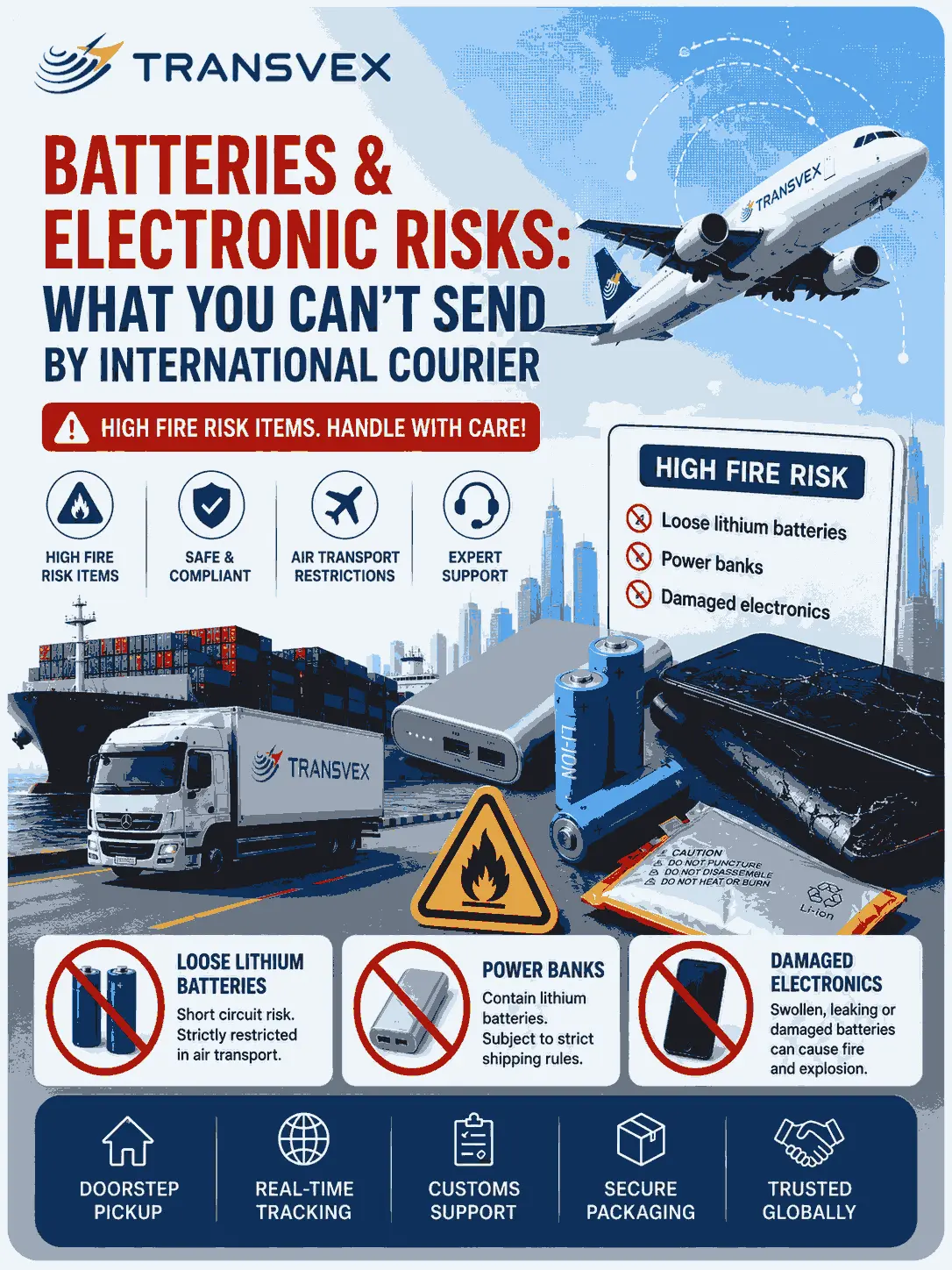
A power bank looks harmless. So does a spare laptop battery sitting in a drawer. But when these items are packed into a parcel and loaded onto an aircraft, the risk can be very different. Lithium batteries power phones, laptops, cameras, watches, wireless earbuds, and many other everyday devices. Most work safely when they are in good condition and used correctly. The concern begins when a battery is loose, damaged, defective, poorly packed, or shipped without the correct information. Some battery-powered items can be accepted under specific conditions, while others may be restricted or refused by standard international courier services.
Why Are Some Batteries a Fire Risk During Air Transport?
- A lithium battery stores a large amount of energy in a small space. That is useful for powering portable devices, but it also means a damaged or faulty battery can become a serious safety concern.
- Problems can begin when exposed battery terminals touch metal objects, a battery is crushed or punctured, a defective cell overheats, poor packaging allows a device to move, or a faulty battery develops an internal short circuit.
- In the worst cases, one failing battery cell can heat nearby cells and create a chain reaction known as thermal runaway. The battery may release heat, smoke, or flammable gases and can potentially catch fire. This is why battery condition matters just as much as the type of electronic device being shipped.
Batteries and Electronic Items You Can’t Send by International Courier
Loose Lithium Batteries
- A loose lithium battery is shipped on its own rather than installed inside the device it powers.
- Examples include spare mobile phone batteries, replacement laptop batteries, loose camera batteries, individual rechargeable lithium cells, and spare batteries for electronic equipment.
- Exposed battery terminals can create a short-circuit risk if they come into contact with keys, coins, tools, wires, or other conductive materials.
- Standalone lithium batteries face different transport requirements from batteries already installed in equipment.
- Battery chemistry, capacity, quantity, packaging, carrier, route, and transport method all need to be considered before shipping.
Power Banks
- A power bank is a portable lithium battery designed to charge other devices, so it can face stricter air transport controls than ordinary electronic accessories.
- Examples include portable phone chargers, high-capacity power banks, laptop charging banks, battery packs with USB ports, and solar power banks with built-in lithium batteries.
- Battery capacity, condition, product information, carrier, and shipping route may all affect whether a power bank can be accepted.
- Check the product label for the watt-hour rating (Wh) and other battery specifications.
- A power bank with no readable label, visible damage, swelling, overheating history, or signs of tampering should not be treated as an ordinary parcel item.
Damaged Electronics
- A working phone and a phone with a swollen battery may look like similar shipments, but they do not present the same transport risk.
- Warning signs include a swollen or bulging battery, a lifting phone screen, an expanding laptop case, leakage, chemical smells, unusual heat, burn marks, melting, or puncture damage.
- Devices damaged by fire or water, or batteries known to be defective or recalled, require careful assessment.
- Extra wrapping or tape cannot make a damaged or unstable battery safe for transport.
- If a device has been dropped, crushed, overheated, or seriously damaged, its condition should be checked before any attempt is made to ship it internationally.
What Is Thermal Runaway?
- A damaged or defective lithium battery can begin to overheat.
- The heat can trigger further chemical reactions inside the battery, producing even more heat.
- If the process continues, nearby battery cells may also be affected.
- Possible results include rapid temperature increase, smoke, release of gases, fire, and ignition of nearby materials.
- This is one reason damaged lithium batteries receive careful attention in air cargo and international courier networks.
Battery Inside a Device vs Loose Battery: What’s the Difference?
- A battery correctly installed inside a laptop or other device is considered contained in equipment.
- A replacement battery placed separately with the device may be considered packed with equipment.
- A battery shipped by itself is a standalone or loose battery.
- These situations can have different transport requirements.
- When speaking to a courier company, explain the exact device, whether it contains a lithium battery, whether the battery is installed, whether spare batteries are included, the battery capacity, and the condition of the device.
How Are Lithium Batteries Identified for Transport?
- Check the battery type and look for terms such as lithium-ion, Li-ion, lithium metal, or rechargeable lithium battery.
- Find the watt-hour rating (Wh) on the battery label, device specification label, product manual, or manufacturer information.
- Do not guess the battery rating if it is unclear.
- Check the physical condition for swelling, leakage, unusual heat, cracks, burn marks, or other visible damage.
- Keep the model number, manufacturer information, battery specifications, and product condition ready for the courier company.
What Happens If Restricted Batteries Are Sent Without Declaration?
- The shipment may be rejected or held for additional inspection.
- Delivery may be delayed or the parcel may be returned.
- Additional charges or other action may apply under relevant carrier or transport procedures.
- An undeclared battery may be handled without the precautions appropriate to its actual risk.
- Always provide the actual product name and relevant battery details instead of describing the parcel only as electronics.
How to Check an Electronic Item Before International Shipping
- Identify the exact device you are sending.
- Check whether it contains a lithium battery and whether the battery is installed or packed separately.
- Confirm whether any loose batteries, spare batteries, or power banks are included.
- Find the battery capacity or watt-hour rating.
- Check whether the battery is swollen, leaking, damaged, defective, or recalled.
- Make sure the product label is readable.
- Confirm whether the courier accepts the exact item on the planned route.
- Check whether special packaging or documentation requirements apply.
Check the Battery Before You Ship
When people think about prohibited courier items, they often imagine obvious dangers. A spare battery or power bank does not always look risky, which is exactly why these items deserve a closer check. Loose lithium batteries, power banks, and damaged electronics can create serious fire risks if they are incorrectly packed, undeclared, defective, or damaged. At the same time, not every electronic device is automatically prohibited. The safest approach is to identify the exact device, check the battery type and condition, and provide accurate information before booking the shipment. If you are unsure whether an electronic item can be sent internationally, contact Transvex with the product name, model, battery details, condition, and destination.