

Imagine fresh Kerala prawns leaving Kochi in the morning and arriving in London. It’s still fresh, chilled, and ready to serve. It sounds challenging, right? But modern temperature-controlled shipping makes this possible every day.
International seafood shipping depends heavily on reliable temperature-controlled systems. Every stage, from packaging and storage to customs clearance and delivery, plays a role in protecting seafood quality. For seafood exporters in Kerala, maintaining freshness is not just about safety — it also affects reputation, customer trust, and long-term business growth.
Need help shipping internationally? Fill out the form below and our logistics specialists will contact you with the best courier solution.

Written By
The Transvex Logistics Team specializes in international courier, cargo, freight forwarding, customs documentation, parcel delivery, and global shipping solutions. Our content is created by logistics professionals to help individuals, families, students, and businesses ship internationally with confidence.
Need help shipping internationally? Fill out the form below and our logistics specialists will contact you with the best courier solution.

Understand the Transfer of Residence (TR) to India rules for shipping personal belongings and household goods. Learn about customs duty, allowances, and unaccompanied baggage.
Read More →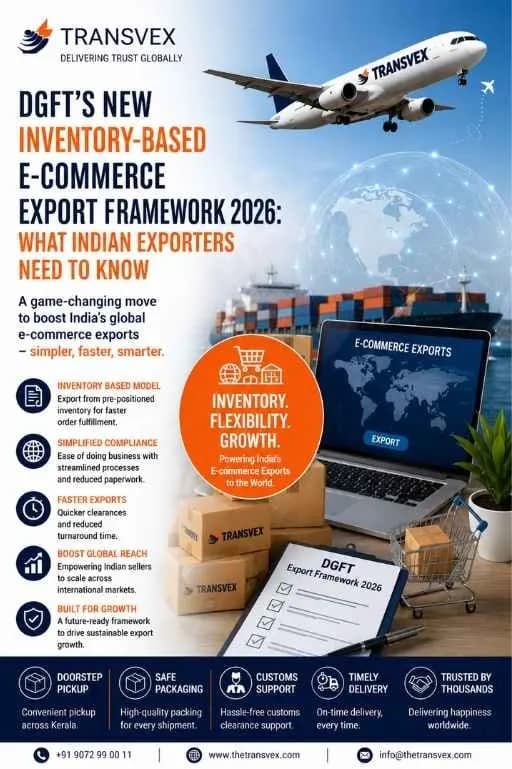
Learn about the DGFT Inventory-Based E-Commerce Export Framework 2026. Understand Exporter-on-Record (EOR), Seller-on-Record (SOR), and the new rules for global shipping.
Read More →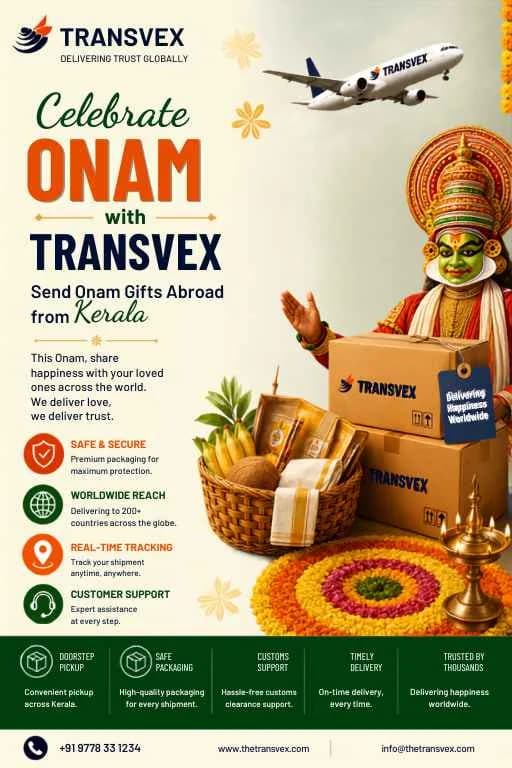
Send Onam gifts, sweets, traditional items, and hampers abroad from Kerala with Transvex. Doorstep pickup, customs clearance support, and global express delivery.
Read More →
We specialise in International Courier and Cargo Solutions, delivering reliability and efficiency across borders. With over 10 years of industry experience, we have grown to become one of the most trusted names in global logistics, offering tailored services for both Air and Sea cargo.
Franchise OpportunityCopyright ©2025 Transvex. All Rights Reserved. Designed By CODE PUBLICIST