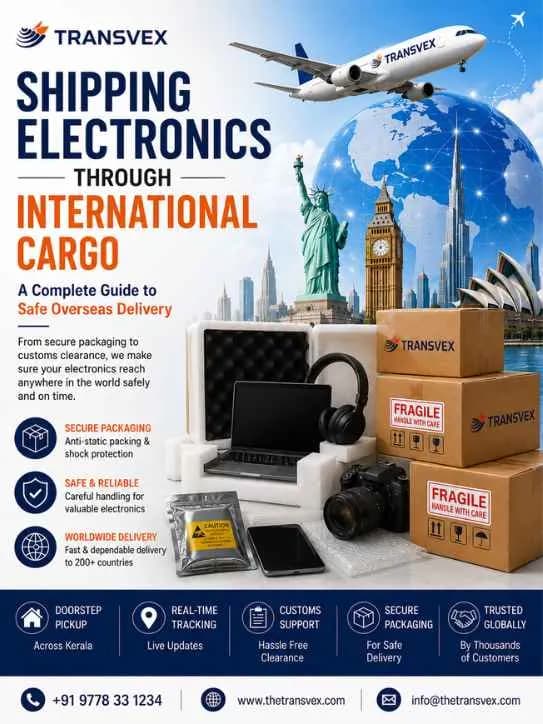

Shipping high-value, delicate electronics overseas—whether sending a laptop to a student abroad, gifting a smartphone to family, or exporting commercial electronics from Kerala—requires specialized care. Electronic devices are sensitive to shock, vulnerable to static, and subject to strict global safety regulations due to lithium-ion batteries.
With modern global logistics, individuals and businesses can access reliable International Cargo Services in Kerala for safe, end-to-end transport. Choosing the right shipping method depends on factors such as device value, shipping speed, lithium battery guidelines, customs requirements, and budget.
This comprehensive guide covers everything you need to know about International Cargo for electronics—from packaging methods and lithium battery regulations to customs clearance, insurance, and cost factors.
Why Choose International Cargo for Electronics Shipping?
Relying on standard postal channels for high-value hardware often exposes packages to unmonitored handling, longer transit delays, and limited insurance options. Utilizing professional cargo networks provides specialized infrastructure designed for delicate equipment.
Benefits of Professional Electronics Shipping
Specialized cargo providers utilize climate-controlled transit routes and structured handling protocols. With real-time tracking and comprehensive insurance options, your valuable electronics stay protected from pickup to destination.
Personal and Commercial Shipments
Whether mailing a single personal device or managing commercial hardware exports, international cargo channels accommodate both personal non-commercial goods and commercial trade documentation seamlessly.
Safe Transportation for Valuable Devices
Professional logistics partners offer dedicated shock-absorbent handling, anti-static packing, and custom crating options designed to prevent physical and electrical damage during long-distance transit.
What Electronic Items Can Be Shipped Internationally?
Most personal and commercial consumer electronics can be transported globally provided they comply with international safety and destination import laws.
Laptops and Desktop Computers
Laptops are among the most frequently shipped devices, particularly for students. Desktop computers require internal component bracing (such as securing GPU cards and CPU coolers) to prevent dislodgement.
Mobile Phones and Tablets
Smartphones and tablets are highly compact but require strict compliance with aviation battery safety standards due to their built-in lithium-ion power cells.
Cameras and Photography Equipment
Professional camera bodies, detachable lenses, and studio lighting demand specialized cushioning to safeguard delicate glass elements and digital sensors.
Gaming Consoles
Consoles like PlayStations and Xboxes ship securely when isolate-packed from peripheral cables and controllers to prevent surface scratching.
Computer Accessories
Monitors, external hard drives, keyboards, and smartwatches ship easily. Curved monitors require reinforced custom wooden crating or factory foam blocks.
How to Pack Electronics for International Shipping
Proper packaging is the single most effective way to prevent transit damage. Follow these core guidelines:
Use Original Packaging When Available
Factory boxes contain custom-engineered foam tailored to your device. Place the original box inside a sturdy, double-walled outer shipping box with cushioning in between.
Protect Devices with Anti-Static and Cushioning Materials
Wrap circuit boards and devices in ESD (Electrostatic Discharge) bags or anti-static bubble wrap to prevent static charges. Ensure at least 2 to 3 inches of high-density foam padding surrounds all sides of the device so it does not touch the outer box walls.
Secure Cables and Accessories
Disconnect all cables, power bricks, and USB connectors. Bundle cords neatly with twist ties and pack them in separate padded compartments to avoid scratching main screens.
Label Fragile Electronic Packages
Affix clear labels reading "FRAGILE - ELECTRONIC EQUIPMENT" and "THIS SIDE UP" orientation arrows on multiple sides of the box.
Shipping other delicate items? Read our detailed guide on Shipping Fragile Items Internationally.
Air Cargo vs Sea Cargo for Electronics
Selecting the appropriate transport mode depends on urgency, cargo volume, and device type.
When Air Cargo Is the Better Option
Air cargo is ideal for high-value, lightweight consumer electronics such as laptops, smartphones, and cameras. It delivers fast transit times (3 to 7 business days) and minimizes climate and moisture exposure risks.
When Sea Cargo Makes Sense
Sea freight works best for bulk commercial electronics exports, heavy office IT setups, or large home entertainment equipment where time is not critical and cost-per-volume is paramount.
Cost vs Transit Time
Air freight charges based on chargeable dimensional weight, offering rapid speed at higher per-kilo rates. Ocean freight calculates cost by CBM (Cubic Meter), offering low rates with longer transit times (20 to 45 days).
Lithium Battery Shipping Regulations
Because damaged or short-circuited lithium batteries pose a thermal hazard, international aviation bodies enforce strict transport regulations.
Devices with Built-in Batteries
Under standards set by the International Air Transport Association (IATA) and International Civil Aviation Organization (ICAO), devices with installed batteries (UN3481) under 100 Watt-hours (Wh) can usually be shipped via air cargo provided the device cannot accidentally turn on.
Spare Lithium Batteries
Loose spare lithium batteries or external power banks (UN3480) are heavily restricted or forbidden on passenger aircraft cargo and require specialized Dangerous Goods (DG) documentation.
International Shipping Restrictions & Safety Guidelines
Ensure battery charge levels are kept below 30% prior to handover, insulate power terminals, and declare all battery-operated devices accurately during booking.
Documents Required for Electronics Shipping
- Air Waybill (AWB) / Bill of Lading (B/L): The primary contract of carriage and tracking record.
- Commercial Invoice / Proforma Invoice: Specifies device details, serial numbers, HS codes, declared values, and reason for export.
- Packing List: Itemized box contents, gross weight, net weight, and package dimensions.
- Customs Declaration: Formal paperwork for export/import regulatory compliance.
Customs Clearance for Electronics
Navigating international trade rules involves adherence to guidelines governed by the World Customs Organization (WCO) and national regulatory bodies like India's Central Board of Indirect Taxes and Customs (CBIC) and Directorate General of Foreign Trade (DGFT).
- Import Duties and Taxes: Assessed on the CIF (Cost, Insurance, Freight) value of the shipment by destination authorities.
- Product Declarations: True purchase or market values must be declared to avoid customs penalties or shipment confiscation.
- Country-Specific Regulations: Certain destinations require technical safety certifications (e.g., FCC, CE marking, or BIS compliance).
Factors That Affect Electronics Shipping Costs
- Weight and Dimensions: Charges are determined by actual weight vs. volumetric weight (calculated as Length × Width × Height in cm / 5000 for air cargo).
- Device Value: Higher-value electronics incur higher ad-valorem cargo insurance premiums.
- Destination Country: Import tariffs, terminal fees, and remote area delivery affect overall cost.
- Shipping Method: Express air freight commands a premium compared to standard economy air or ocean freight.
- Insurance & Customs Duties: Mandatory destination taxes and optional all-risk cargo insurance policies.
Tips for Safe International Electronics Shipping
- Back up your data before shipping: Store files securely on cloud storage or external hard drives before dispatch.
- Remove personal information if required: Deactivate activation locks (e.g., Find My Device) and wipe confidential personal data.
- Purchase cargo insurance: Protect against accidental loss, transit damage, or physical theft during transit.
- Use quality packaging: Double-box items with ESD protection and high-density foam cushioning.
- Choose a trusted international cargo provider: Partner with an experienced logistics carrier familiar with battery guidelines and customs clearing.
Explore Other International Cargo Solutions
Relocating or sending additional items overseas? Check out our specialized guides:
Frequently Asked Questions
Can I ship laptops internationally?
Yes, laptops can be shipped internationally via air cargo. Because they contain built-in lithium batteries, they must be safely packaged, fully powered down, and accurately declared on the Commercial Invoice and Air Waybill.
Can I ship mobile phones with batteries?
Yes, smartphones with non-removable internal batteries can be shipped under IATA Section II guidelines. However, loose power banks or spare uninstalled batteries face strict Dangerous Goods restrictions.
Is air cargo safer for electronics?
Yes, air cargo is generally safer for consumer electronics like laptops and cameras due to significantly shorter transit times, minimal humidity exposure, and fewer physical handling transfers compared to ocean freight.
How are electronics shipping charges calculated?
Charges are determined by comparing actual gross weight against volumetric weight (Length × Width × Height in cm / 5000). The carrier bills based on whichever value is greater, plus fuel surcharges, insurance, and local customs duties.
Do electronic devices require customs clearance?
Yes, all international electronics shipments must undergo export and import customs clearance. Depending on the destination and declared device value, import duties or taxes may apply.
Final Thoughts
Shipping electronic devices internationally requires a balance of protective anti-static packaging, strict adherence to airline lithium battery rules, accurate documentation, and proper customs valuation.
Whether you are shipping personal laptops, mobile phones, or commercial electronics, choosing an experienced International Electronics Shipping Service ensures your devices arrive safely, securely, and on schedule.