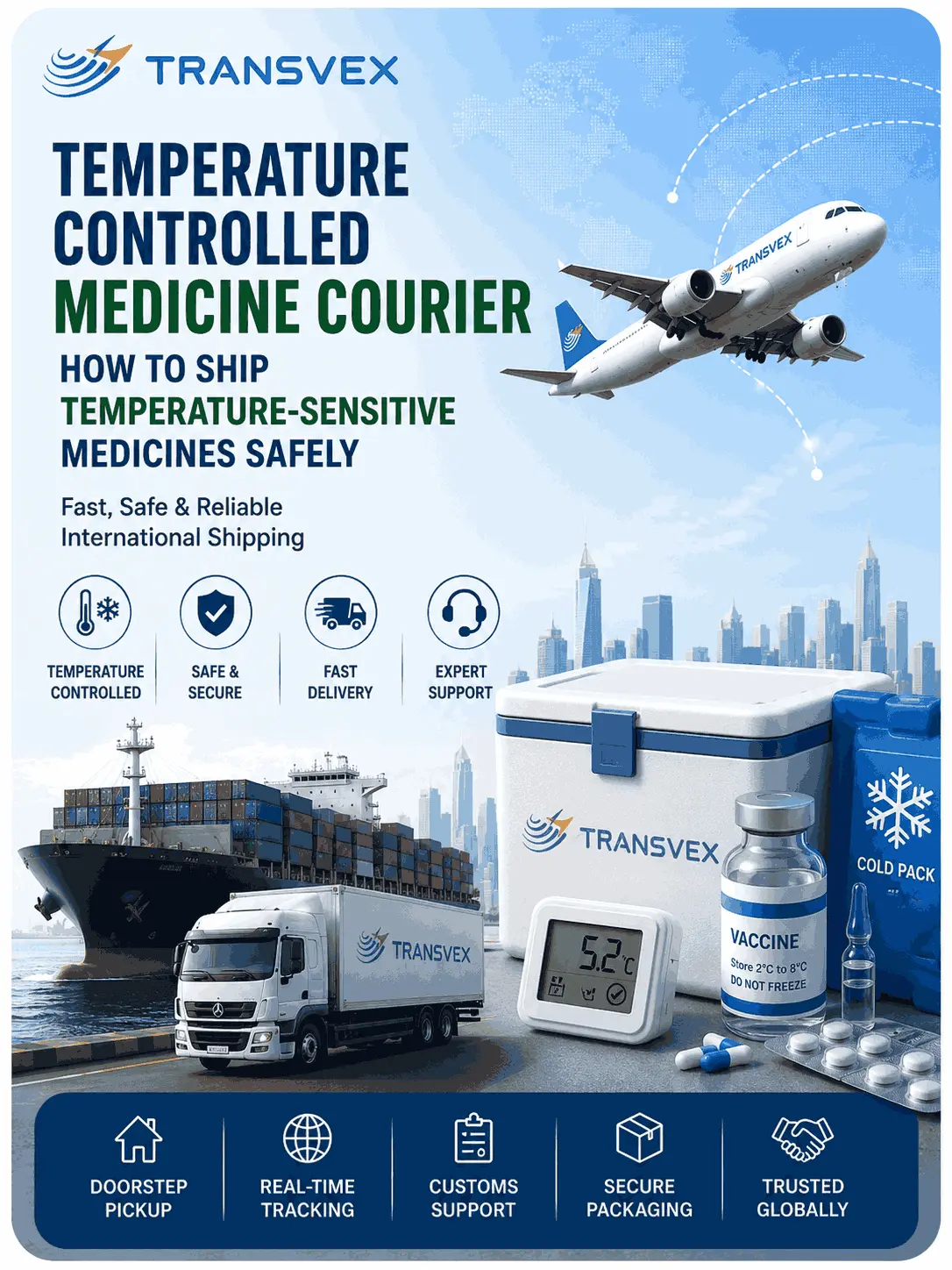
Shipping medicines internationally is not the same as shipping ordinary parcels. Many medicines — including insulin, vaccines, biologics, and specialty drugs — must stay within a narrow temperature range from the moment they're picked up to the moment they're delivered. If that range is broken, even briefly, the medicine can lose its effectiveness or become unsafe to use. This is where a temperature controlled medicine courier becomes essential.
Whether you're a patient sending medicines to a family member abroad, a caregiver arranging a one-time shipment, or a healthcare provider handling regular pharmaceutical shipments, understanding how temperature sensitive medicine shipping works can help you avoid costly mistakes. This guide walks through the packaging, documentation, and courier selection process for a safe international medicine courier experience.
What Is a Temperature Controlled Medicine Courier?
- A temperature controlled medicine courier is a shipping service designed specifically to maintain a required temperature range for pharmaceutical products throughout transit. This process is often referred to as cold chain logistics — an unbroken sequence of temperature-controlled steps that starts at pickup and continues through transport, customs handling, and final delivery.
Unlike standard parcel delivery, a pharmaceutical courier service accounts for the fact that medicines can degrade quickly outside their intended temperature range. This means using insulated packaging, coordinating faster transit routes, and minimizing the number of times a shipment changes hands. Medical courier services built around temperature controlled transport aim to reduce these risks at every stage, from the sender's doorstep to the recipient's address overseas.
- Not all medicines are temperature-sensitive, but many common ones are. Insulin, certain vaccines, biologics, and other refrigerated medicines typically need to stay within a specific range — often between 2°C and 8°C, though this varies by product and manufacturer guidance.
Exposure to heat, direct sunlight, or freezing conditions during transit can break down the active compounds in these medicines. In some cases, this reduces how well the medicine works. In others, it can render the product unsafe or unusable altogether. Because temperature fluctuations aren't always visible to the naked eye, the risk isn't just theoretical — it's why healthcare providers and pharmacists are so particular about how these shipments are handled.
This is also why generic courier services, which are not built for temperature-sensitive pharmaceuticals, are usually not a suitable choice for this kind of shipment.
How Temperature-Sensitive Medicines Are Packed
Packaging Essentials
- Insulated packaging: Outer boxes are lined with insulating material designed to slow down heat transfer and protect contents from external temperature changes.
- Thermal boxes: Specialized containers are often used in place of standard cardboard boxes, offering better temperature retention over longer transit times.
- Gel ice packs: These are placed strategically within the package to help maintain a stable internal temperature, particularly for shipments that need refrigeration-level conditions.
- Temperature monitoring devices: Some shipments include monitoring tools or indicators that track temperature exposure throughout the journey, offering visibility into whether the cold chain was maintained.
Required Documents
- Prescription: A valid prescription from a licensed doctor, particularly for prescription-only medicines.
- Doctor's letter: A letter explaining the medical necessity of the shipment, often required for controlled or specialty medicines.
- Invoice: A commercial or personal invoice detailing the contents, quantity, and value of the shipment.
- Customs documentation: Additional forms required by the destination country's customs authority to clear the shipment for entry.
Countries with Strict Import Regulations
- Many countries regulate the import of medicines closely, even for personal use. Destinations such as the USA, Canada, the UK, Australia, and countries in the UAE and wider Gulf region often have specific rules around what can be imported, in what quantity, and with what supporting documentation.
- Some countries restrict certain medicine categories entirely, while others require prior approval or additional certification. Because these regulations can change and differ significantly from one country to another, it's always advisable to verify import rules before shipping, rather than assuming that documentation sufficient for one destination will work for another.
Choosing the Right Courier
- Experience: A courier with a track record in handling medical and pharmaceutical shipments is more likely to understand the nuances of cold chain logistics.
- Global network: A wide global courier network helps ensure smoother handovers and fewer transit delays, especially for time-sensitive shipments.
- Customs support: Couriers that offer guidance on export documentation and customs requirements can help reduce the chances of a shipment being held up.
- Tracking: Reliable delivery tracking gives senders and recipients visibility into where the shipment is and when it's expected to arrive.
- Packaging assistance: Support with sourcing or preparing appropriate insulated packaging removes much of the guesswork for senders.
- Fast delivery: Since temperature-sensitive medicines are time-sensitive by nature, express international shipping options matter.
Common Mistakes to Avoid
- Poor packaging: Using standard boxes without insulation or ice packs for medicines that require refrigeration.
- Missing prescription: Attempting to ship prescription medicines without the corresponding prescription or supporting documents.
- Sending restricted medicines: Shipping medicines that are restricted or banned in the destination country, often without realizing it.
- Incorrect documentation: Submitting the wrong forms or incomplete paperwork for the destination country's customs process.
- Choosing a courier without cold chain support: Using a general parcel service that isn't equipped to maintain temperature control over the full transit period.
Why Choose Transvex
- Pickup assistance for medicine shipments, reducing the hassle of drop-off logistics
- Support for international shipping to multiple destinations, including strict-regulation countries
- Secure packaging guidance tailored to temperature-sensitive medical products
- Documentation support to help ensure the right paperwork accompanies each shipment
- Shipment tracking so senders and recipients can monitor progress
- A reliable delivery network built for international parcel delivery and global shipping needs